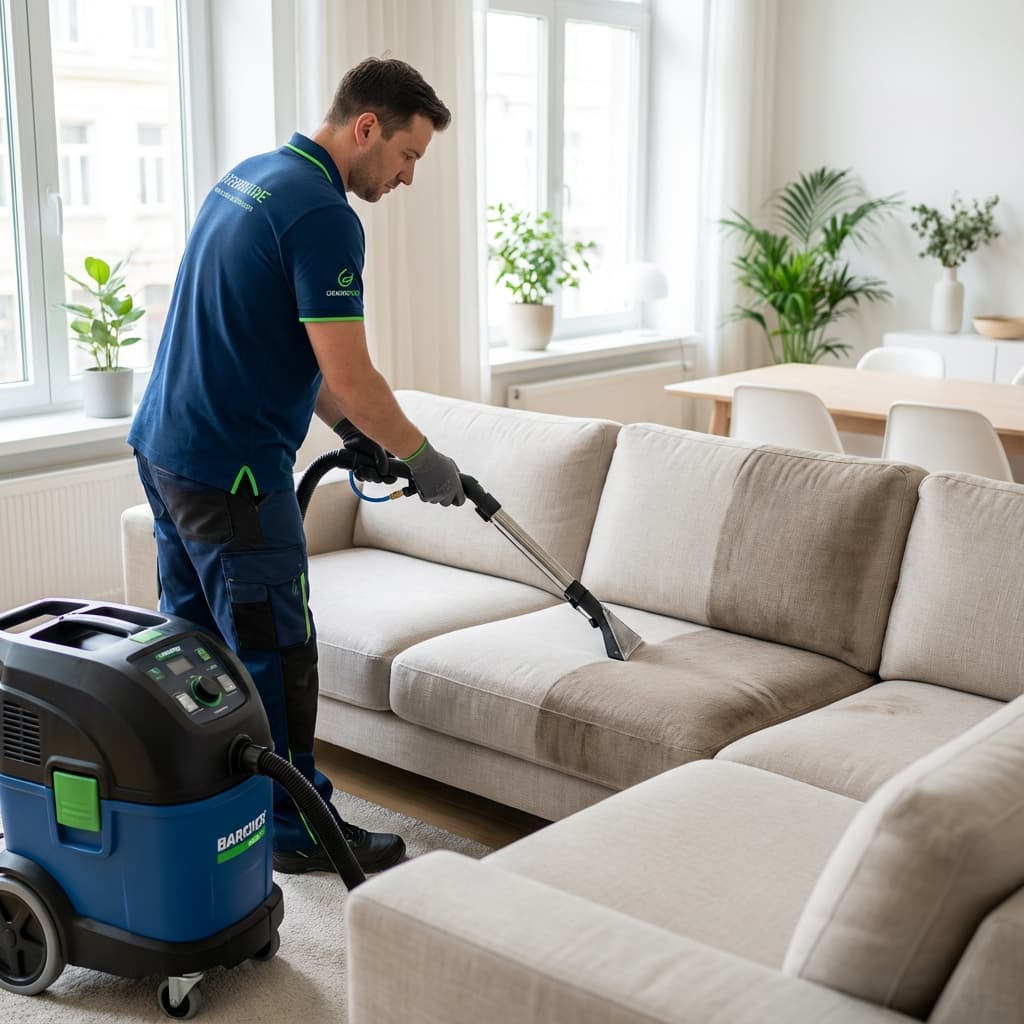
If your sofa has lost its original colour, it is probably holding far more soil than it appears.
Lingering smells and recurring spots usually need extraction, not another wipe-down.
Regular professional care protects fabric texture and extends furniture life.
Content Intent
Reviewed for practical accuracy and local relevance
Helps homeowners identify when upholstery has moved beyond routine vacuuming and needs professional extraction and fabric-safe treatment.
Written by Ausgaroo Editorial Team and reviewed by Ausgaroo Cleaning Service Review Team (Fabric Care Review).
Drying time and stain outcomes vary by fabric type, cushion depth, existing damage, airflow, and how long spills have been left untreated.
Visible grime is only part of the story
Most upholstery gets dirty gradually through body oils, skin particles, food crumbs, airborne dust, and daily use. Because the change happens slowly, many people do not notice the fabric has dulled until one cushion is moved and the original tone appears underneath.
Darkened headrests, armrests, and seat fronts are common hotspots. If the fabric looks tired even after vacuuming, a deeper clean is usually overdue.
Odours and repeat stains are strong warning signs
A sofa that keeps smelling stale, smoky, or slightly sour usually has residue sitting inside the fibres. Sprays may mask the smell briefly, but they do not remove the cause.
The same applies to stains that seem to come back after drying. Wicking happens when soiling below the surface rises again, which is why extraction and fabric-appropriate treatment matter.
Professional cleaning preserves comfort and fabric finish
Upholstery care is not just cosmetic. Removing embedded dust and residue helps the fabric feel cleaner, sit softer, and wear more evenly over time.
A professional technician can also identify delicate materials, test colourfastness, and choose a safe method for each piece instead of relying on one-size-fits-all products.